
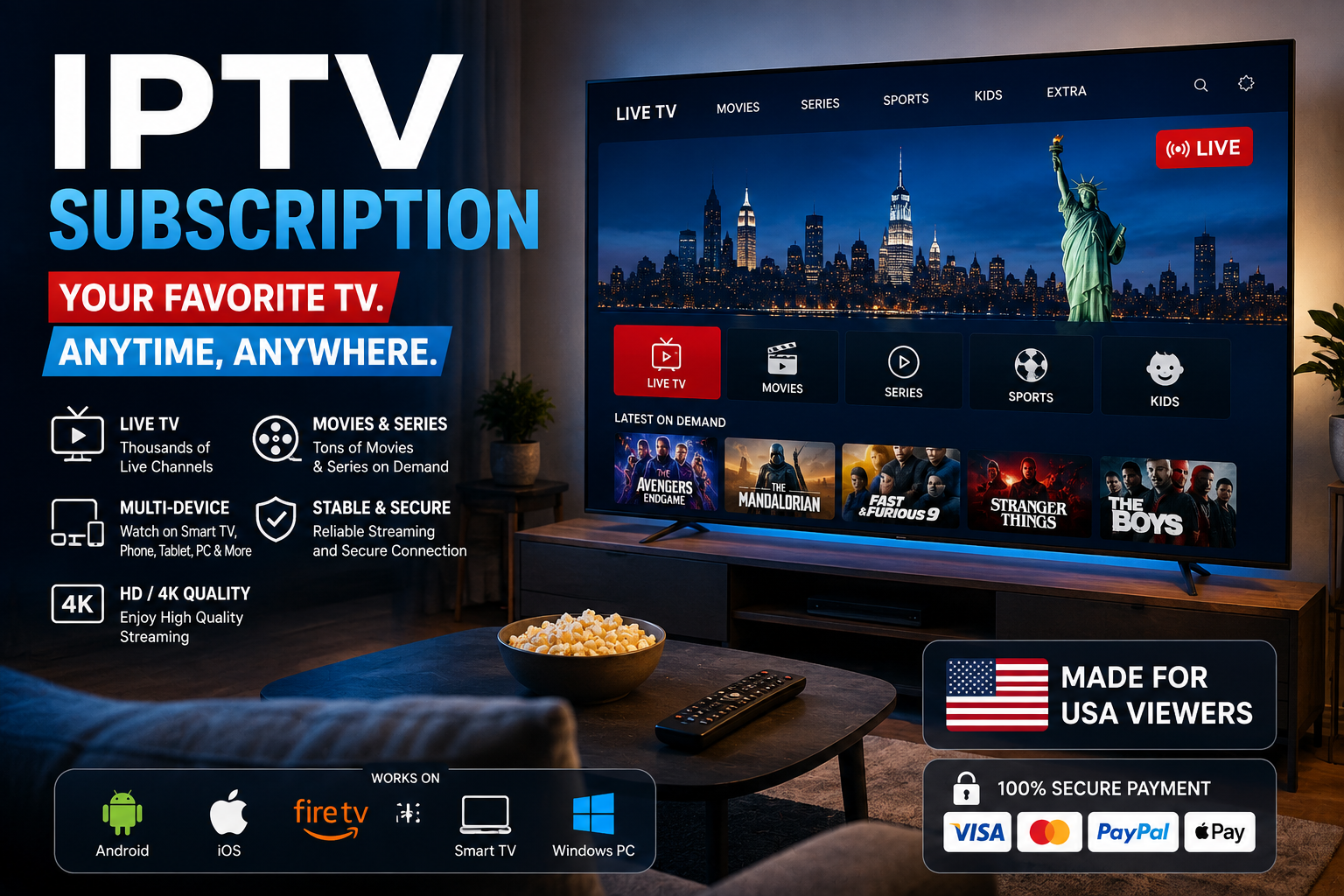
Internet-based television has become an important part of modern home entertainment in the United States. Smart TVs, streaming devices, smartphones, tablets, and computers allow viewers to access television and video content through internet-connected platforms.
If you are researching an IPTV subscription, it is important to look beyond price and channel counts. Device compatibility, streaming quality, subscription terms, privacy, customer support, and content authorization should all be considered before making a decision.
What Is an IPTV Subscription?
IPTV stands for Internet Protocol Television and refers to television or multimedia content delivered through IP-based networks.
An IPTV subscription generally provides access to a provider’s television or video services for a specified period. The exact content and features depend on the provider.
IPTV is a delivery technology, however, so the technology itself does not establish whether a particular service is authorized. The provider needs appropriate rights for the content it distributes. The U.S. Copyright Office discusses IPTV and subscription television as part of the broader television and streaming landscape.
What Should You Check Before Subscribing?
1. Content Availability
Start by identifying the programming you actually want.
A large channel count does not necessarily mean better value. Look for clear information about the content included with the subscription.
Depending on the service, categories may include:
- Live television
- News
- Sports
- Movies
- Series
- On-demand programming
- Entertainment
2. Device Compatibility
Check whether the service works with the device you intend to use.
Potential platforms can include:
- Smart TVs
- Fire TV devices
- Android TV
- Google TV
- Apple TV
- Smartphones
- Tablets
- Computers
Compatibility can vary between applications and devices, so check the provider’s current requirements before subscribing.
For more information about IPTV in the American market, see our IPTV USA guide.
3. Streaming Quality
Streaming quality depends on several factors, including:
- Video resolution
- Internet performance
- Wi-Fi signal
- Device capabilities
- Application performance
- Service infrastructure
A 4K television does not automatically guarantee 4K streaming. The content, application, device, and network also need to support the required quality.
4. Internet Connection
Your internet connection plays an important role in streaming.
A household with one viewer has different requirements from a household where several people are simultaneously streaming video, gaming, attending video calls, and downloading files.
If you experience buffering, check your Wi-Fi signal and network usage rather than assuming that you simply need a faster internet plan.
Our Smart TV IPTV setup guide includes additional information about connecting compatible devices and improving streaming performance.
5. Subscription Terms
Read the terms before purchasing.
Pay particular attention to:
- Subscription price
- Duration
- Renewal conditions
- Cancellation policy
- Refund policy
- Supported devices
- Account limitations
Clear terms make it easier to understand exactly what you are paying for.
6. Privacy and Security
Review the provider’s privacy policy before creating an account.
Check what information is collected, how it is used, and how account information is protected.
When making a payment, use the provider’s official website and an established payment method whenever possible.
7. Content Authorization
This is one of the most important considerations.
A service using IPTV technology is not automatically authorized to distribute every television program, movie, or sporting event it advertises.
The U.S. Copyright Office notes that television and streaming services commonly rely on licensing and other legal arrangements for the distribution of copyrighted content.
Before subscribing, look for clear information about the provider and the rights associated with its programming.
IPTV Subscription vs Traditional TV
Traditional television can use terrestrial broadcasting, cable, or satellite infrastructure, while IPTV uses IP-based networks.
Modern households can use several technologies at the same time. For example, a Smart TV can receive traditional broadcasts while also running internet-based applications.
If you want to understand the differences in greater detail, read our IPTV vs Traditional TV guide.
IPTV on Smart TV
Smart TVs can be a convenient way to access compatible internet-based television services.
Depending on the television platform and provider, an authorized application may be available directly through the relevant application store.
Before subscribing, check whether your specific television model and operating system are supported.
IPTV on Fire TV
Fire TV devices provide another option for accessing compatible streaming applications.
If you use a Fire TV device, make sure the application you choose is compatible with your model and obtained through an authorized source.
Our IPTV Firestick setup guide provides additional information about setting up compatible services on Fire TV.
How to Compare IPTV Subscriptions
A simple comparison can help you make a better decision:
| Factor | What to Check |
|---|---|
| Content | Does it include what you want to watch? |
| Compatibility | Does it support your device? |
| Quality | Does it support your preferred resolution? |
| Price | What is the complete subscription cost? |
| Renewal | Are renewal terms clear? |
| Cancellation | Is the cancellation process explained? |
| Support | Can you contact customer support? |
| Privacy | Is your information handled transparently? |
| Authorization | Is the content properly authorized? |
Common Mistakes to Avoid
Choosing Only by Price
The cheapest subscription is not necessarily the best option.
Focusing Only on Channel Numbers
A large channel list does not guarantee that the service contains the programming you actually want.
Ignoring Compatibility
Always confirm that your device and operating system are supported.
Not Reading Renewal Terms
Check whether the subscription renews automatically and understand how cancellation works.
Ignoring Content Rights
Choose services that clearly have the appropriate authorization for the programming they distribute.
Is IPTV Legal in the USA?
IPTV as a technology is simply a method of delivering television and multimedia content through IP networks.
The legal status of an individual service depends on how it operates and whether it has the appropriate rights to distribute its content.
For consumers, the safest approach is to research the provider, read its terms, and look for transparent information about its programming and licensing.
Is an IPTV Subscription Worth It?
There is no single answer for every household.
An IPTV subscription may be worth considering when it offers:
- Content you actually watch
- Compatibility with your devices
- Suitable streaming quality
- Transparent pricing
- Clear subscription terms
- Useful customer support
- Appropriate content authorization
The most important factor is finding a service that matches your actual viewing needs rather than choosing one based solely on marketing claims.
Final Thoughts
An IPTV subscription can provide access to internet-delivered television and multimedia content through compatible devices.
Before subscribing, compare the available programming, supported devices, streaming quality, internet requirements, pricing, renewal conditions, privacy practices, customer support, and content authorization.
If you want to learn more about IPTV technology and available setup options, BuyIPTVfor4K.com provides additional guides for viewers researching IPTV and connected television.
A careful comparison can help you make a more informed decision and choose a service that fits your household’s technology and viewing requirements.
6 Replies to “IPTV Subscription: What to Know Before Choosing a Service in the USA”