
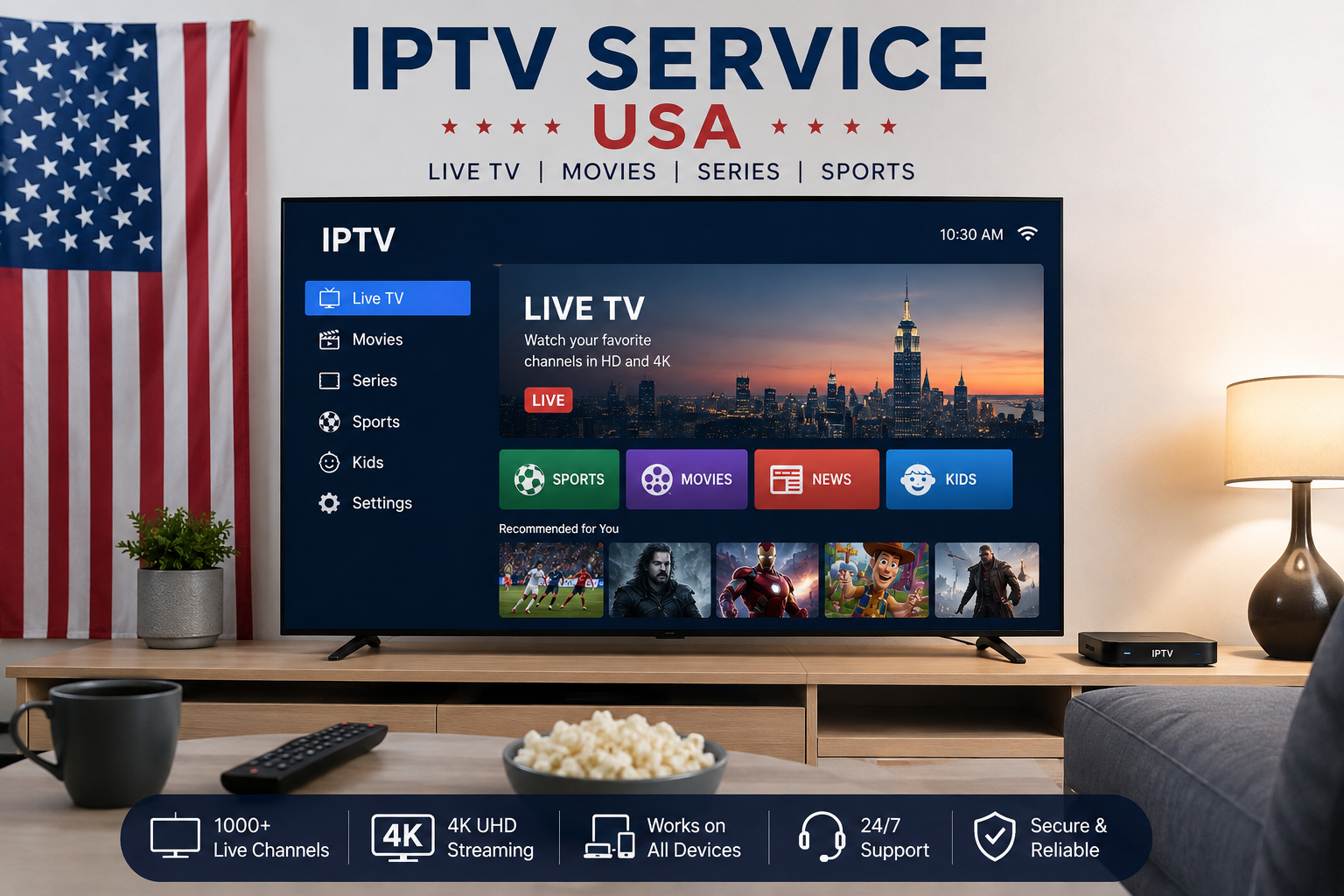
Choosing an IPTV service USA viewers can rely on involves more than comparing prices or looking at the number of channels advertised. Internet-based television services can differ in content, device compatibility, streaming quality, subscription terms, customer support, privacy, and content authorization.
For viewers in the United States, understanding these factors can make it easier to compare available options and choose a service that fits their household.
What Is an IPTV Service?
IPTV stands for Internet Protocol Television and refers to television or multimedia content delivered through IP-based networks.
Unlike traditional television delivery methods such as terrestrial broadcasting, cable, or satellite, IPTV uses internet connectivity to deliver content to compatible devices.
Depending on the provider, an IPTV service can include live television, on-demand programming, or other digital entertainment.
However, IPTV is a technology rather than a guarantee of content rights. The provider is responsible for having the appropriate authorization for the content it distributes.
What Should You Look for in an IPTV Service USA?
There is no single service that is perfect for every viewer. Your choice should depend on what you watch, which devices you use, and what features matter most to you.
Important factors include:
- Content availability
- Device compatibility
- Streaming quality
- Internet requirements
- Subscription terms
- Customer support
- Privacy
- Content authorization
1. Check the Available Content
Start by identifying the programming you actually want.
Depending on the provider, an internet-based television service may offer:
- Live television
- News
- Sports
- Movies
- Series
- Entertainment
- On-demand content
A large channel count does not automatically mean better value. Relevant content and reliable access are more important than a headline number.
2. Check Device Compatibility
Before subscribing, make sure the service supports the devices you plan to use.
Depending on the provider, compatibility may include:
- Samsung Smart TVs
- LG Smart TVs
- Android TV
- Google TV
- Amazon Fire TV
- Apple TV
- Smartphones
- Tablets
- Windows computers
- Mac computers
Compatibility can vary by application, operating system, device model, and region.
If you use a Smart TV, our IPTV Smart TV setup guide provides additional information about preparing a compatible television.
3. Consider Streaming Quality
Streaming quality depends on several parts of the setup.
These can include:
- Internet connection
- Wi-Fi signal
- Router performance
- Device capabilities
- Application performance
- Video resolution
- Network congestion
If you want HD or 4K content, your television, application, network, and content source all need to support the desired quality.
A 4K television alone does not guarantee that every stream will be delivered in native 4K.
4. Check Your Internet Connection
A stable connection is important for internet-based television.
The requirements can vary depending on video quality and the number of devices using the network.
For example, a household where several people simultaneously stream video, play online games, download files, or use video calls may require more bandwidth than a single viewer.
If you experience buffering, check your Wi-Fi signal, router position, network activity, and other connected devices.
5. Compare Subscription Plans
Price is only one part of the decision.
Before subscribing, review:
- Total subscription price
- Subscription duration
- Renewal conditions
- Cancellation policy
- Refund policy
- Supported devices
- Account limitations
A transparent provider should clearly explain what is included in each plan.
6. Evaluate Customer Support
Customer support can be particularly useful when setting up an account or troubleshooting technical problems.
Look for clear information about:
- Contact methods
- Setup assistance
- Account support
- Technical support
- Expected response times
A provider that clearly explains its support process is easier to evaluate before purchasing.
7. Review Privacy and Security
Before creating an account, read the provider’s privacy information.
Check what personal data is collected, why it is collected, and how it is handled.
When making an online payment, use the provider’s official website and an established payment method whenever possible.
Avoid entering account details into unknown websites or unofficial applications.
8. Check Content Authorization
Content authorization is one of the most important considerations when comparing IPTV services.
The fact that a provider uses IPTV technology does not automatically mean it has permission to distribute every channel, movie, series, or sporting event it advertises.
Consumers should therefore look for transparent information about the provider and the content it distributes.
The U.S. Copyright Office provides information about copyright protection and the use of copyrighted works in television and digital distribution. (copyright.gov)
IPTV Service on Smart TV
Smart TVs can be a convenient way to access compatible internet-based television applications.
Depending on the provider and television platform, an authorized application may be available directly through the relevant application store.
Before subscribing, check:
- TV manufacturer
- Model
- Operating system
- Application availability
- Supported resolution
- Regional compatibility
IPTV Service on Fire TV
Fire TV devices can provide another option for accessing compatible streaming applications.
A separate device can be useful when your television does not support the application you need.
Always check compatibility and use legitimate application sources.
Our IPTV Firestick setup guide provides additional information about compatible Fire TV setups.
IPTV Service for 4K Streaming
4K streaming requires more than a 4K television.
A complete setup may need:
- A 4K-capable television
- Compatible 4K content
- Suitable hardware
- An application that supports the resolution
- Adequate network performance
If any part of the system has a lower capability, the final stream may be delivered at a lower resolution.
How to Compare IPTV Services
Before choosing a provider, consider creating a simple comparison:
| Factor | What to Check |
|---|---|
| Content | Does it provide the programming you want? |
| Compatibility | Does it support your devices? |
| Quality | Does it support your preferred resolution? |
| Price | What is the total subscription cost? |
| Renewal | Are renewal terms clear? |
| Cancellation | Is the cancellation process explained? |
| Support | Is customer assistance available? |
| Privacy | Is your information handled transparently? |
| Authorization | Are content rights clearly explained? |
This approach helps you compare the complete service instead of focusing on a single marketing claim.
Common Mistakes to Avoid
Choosing Only by Price
The lowest price does not necessarily mean the best overall value.
Focusing Only on Channel Numbers
A large channel list does not guarantee that the service offers the content you actually want.
Ignoring Compatibility
Always verify that your specific device is supported before subscribing.
Forgetting Renewal Conditions
Read the subscription terms carefully and understand how renewal and cancellation work.
Ignoring Content Rights
Choose providers that offer clear information about the authorization of the content they distribute.
Is IPTV Legal in the USA?
IPTV is a technology for delivering television and multimedia content through IP networks.
The legal position of an individual service depends on how it operates and whether it has the necessary rights to distribute its content.
For consumers, the safest approach is to research the provider, review its terms, and look for transparent information about its programming and authorization.
What Makes a Good IPTV Service?
A suitable IPTV service should ideally provide:
- Relevant programming
- Device compatibility
- Appropriate streaming quality
- Transparent pricing
- Clear subscription conditions
- Customer support
- Privacy information
- Appropriate content authorization
The right choice depends on your viewing habits, devices, internet connection, and budget.
Final Thoughts
Choosing an IPTV service USA viewers can rely on requires careful research.
Rather than focusing only on price or the number of advertised channels, compare content, device compatibility, streaming quality, internet requirements, subscription terms, customer support, privacy, and content authorization.
Taking the time to evaluate these factors can help you make a more informed decision and choose an internet-based television service that fits your needs.
For more information about IPTV technology, compatible devices, and streaming guides, visit BuyIPTVfor4K.com and explore the other resources available on the site.
Trend: